

Pickup Array Layout
Array Microphone Design
2-array, 4-array, 8-array and circular microphone layouts for embedded device integration.
2-mic 4-mic 8-mic Circular Array
Camera Module & Microphone Array OEM / ODM
From pickup array layout and sensor selection to audio algorithm tuning, interface protocols and mechanical dimensions, HAOKAI turns the acoustic front end and vision module into one production-ready custom solution.
Start a Customization InquiryWhat can be customized
HAOKAI helps OEM and ODM teams connect microphone layout, audio algorithms, hardware interface and mechanical structure into one production-ready voice pickup module.
Pickup Array Layout
2-array, 4-array, 8-array and circular microphone layouts for embedded device integration.
Audio Algorithms
AEC, noise suppression, voice enhancement, AGC and sound source localization options.
Interfaces & Protocols
Camera and microphone front-end integration for intelligent audio-video terminals.
Structure & Production
Board layout, interface selection, enclosure fit, firmware tuning and production validation.
Platform compatibility
The camera and microphone array are one link in the device's full audio-video chain. We align the module, protocol and tuning path with the host, interface and structure you have selected, rather than treating them as standalone accessories.
Driver-free UVC direct connection to the host, with USB 2.0 and USB 3.0 bandwidth tiers; selected models also offer HDMI output.
Microphone arrays are plug-and-play over USB 2.0 + UAC 1.0, with optional 3.5 mm audio output and serial TTL coordinate output.
Develop to your specified sensor or redesign the existing PCB outline; firmware parameters, output channels and debug ports are locked as part of the custom solution.
Base platforms
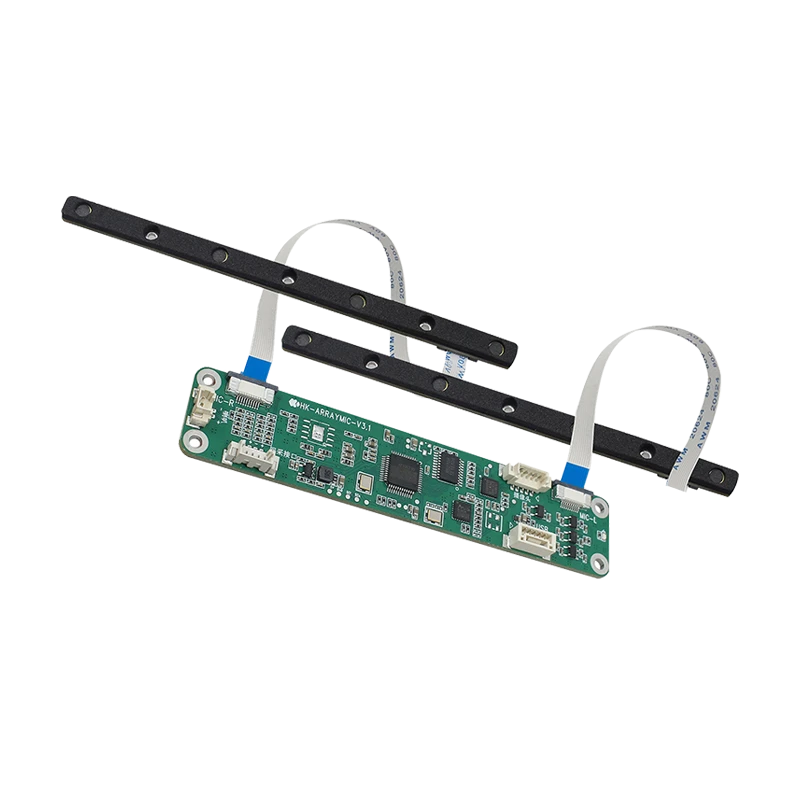
HCI for digital humans, virtual humans, all-in-ones and displays
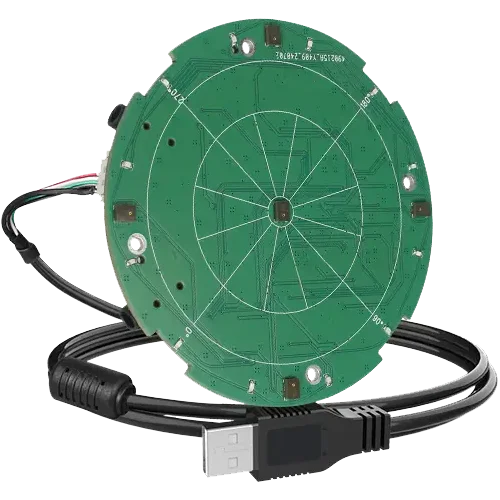
For far-field 360° omnidirectional voice pickup
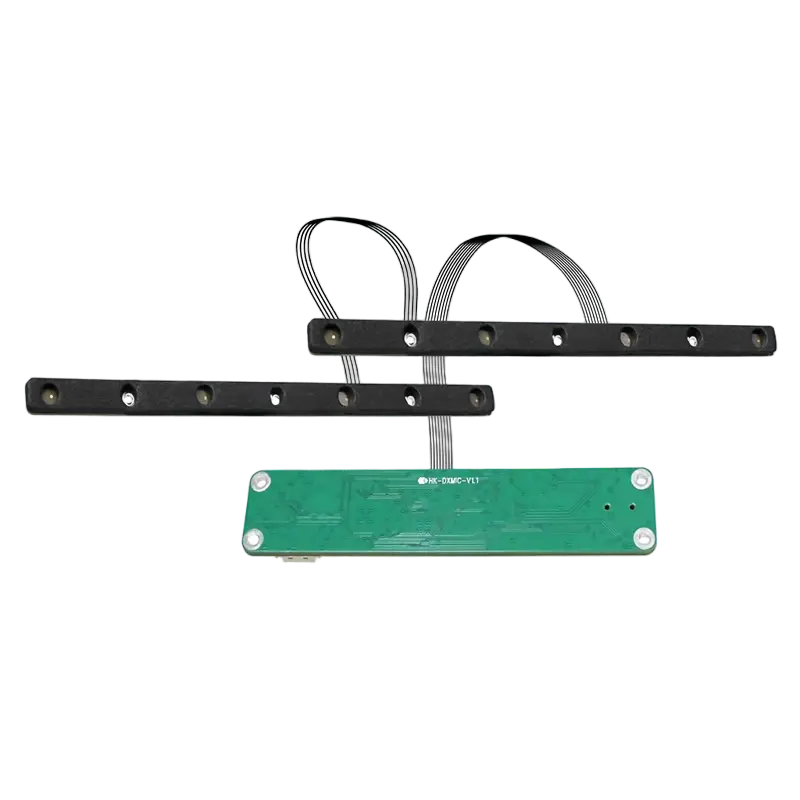
Large displays, HCI, digital humans, conferencing, education, Android
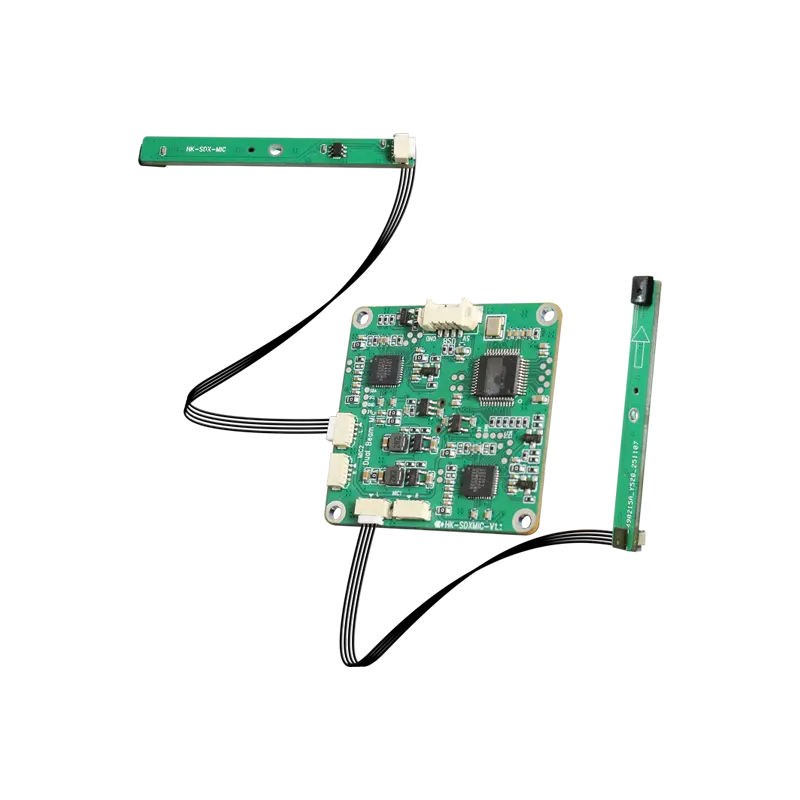
4-array dual-directional module separating two counter-side speakers
Acoustic performance targets
The values below come from existing models and product documentation on this site and can be reproduced directly. Final performance depends on the selected sensor, array configuration, enclosure and test environment, and is confirmed during the proposal stage.
Microphone Array
8 Mic
Evenly spaced circular layout
Pickup Distance
8 m
360° omnidirectional far-field pickup
Voice Processing
AEC + ANS
Echo cancellation · noise suppression
Directional Beam Width
60°
60° beamforming locks onto the target speaker at long range and in noisy environments.
USB 2.0 Bandwidth
480 Mb/s
In practice up to 0.36MP @ 120FPS, 1.3MP @ 33FPS and 5MP @ 9FPS.
USB 3.0 Bandwidth
5 Gb/s
In practice up to 1.3MP @ 230FPS, 3MP @ 100FPS and 10MP @ 30FPS.
Structure & Interfaces
Electronic layouts, structural acoustic design, MEMS sensor integration and firmware tuning keep algorithms and hardware reproducible in mass production.
Redesign the existing PCB outline around the device's mounting space, defining mounting holes, FPC routing and connector positions.
Define the pinout to your specified sensor and host interface, confirming power, signal and debug connections before the drawings go out.
Camera and microphone matched at source and delivered as a set; imaging and pickup are validated in your device before parameters are locked.
Application fit
| Scenario | Pickup & Imaging Needs | Key capabilities |
|---|---|---|
| AI Digital Human Interaction | Visual localization plus far-field pickup — digital humans that see, hear, and answer accurately | 360° / 8-array / Binocular |
| Video Conferencing | A conferencing front end that sees the whole room and hears every voice clearly | 4K / 60° / AEC |
| Smart Terminal & Counter Service | Every self-service device that recognizes people and understands speech | 120° / Binocular / 7×24 |
| Robotics & AI Voice Interaction | 360° sound source localization plus compact visual tracking, letting robots locate a voice and turn to respond | 360° / 8-array / MIPI |
| Education & Lecture Capture | AI voice enhancement plus HD lecture capture, so every corner of the classroom is heard and seen | 8 m / 90%+ / Auto |
| Security, Judicial & Monitoring | High-precision identity verification that balances compliance with smooth passage | Binocular / IR / Global shutter |
Customization showcase
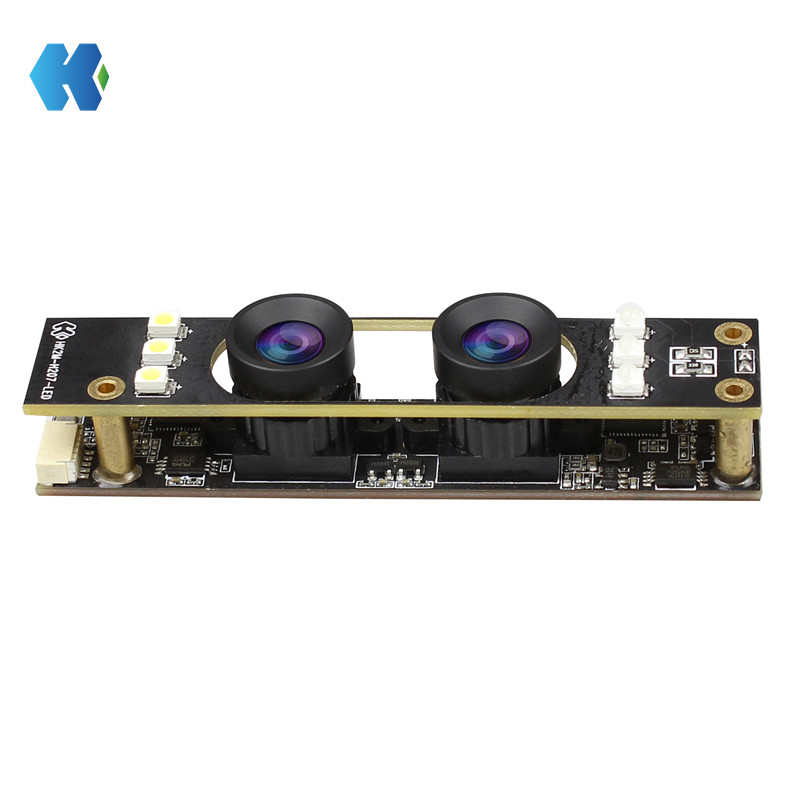
Rail Transit
Dual-lens face cameras enable self-service ticket purchase and face verification, while 4-microphone arrays working with speech recognition provide voice-driven information lookup, route planning and ticketing.
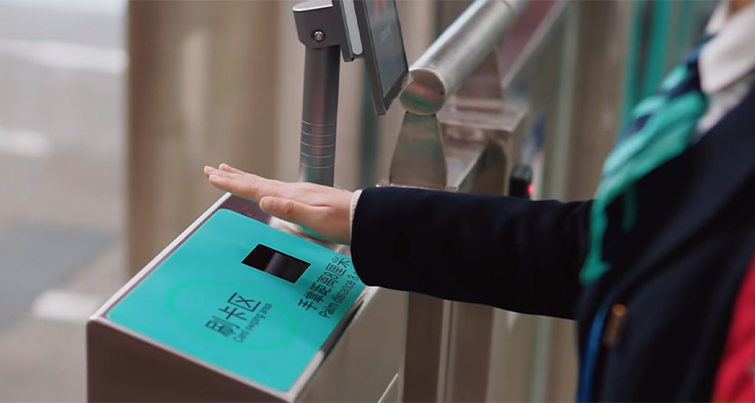
Rail Transit
A global shutter camera paired with palm vein feature recognition algorithms enables fast, contactless fare validation that stays robust even when the palm surface is dirty or wet.
Development workflow
Confirm the sensor model, pinout, mechanical dimensions and interface form, and define the deliverable scope.
Assess optical and acoustic feasibility, BOM cost and sampling schedule, and deliver an executable customization plan.
Deliver samples with firmware tuning support, and validate imaging and voice pickup results in your device.
Freeze the process and test items, and move from a passing pilot run into volume supply with batch consistency.
Before proposal
Share the product and scenario context first. HAOKAI can then recommend a base module, estimate the modification scope, and flag mechanical and acoustic risks early.
FAQ
Yes. Most projects start from a mass-produced base module, then adjust the sensor, PCB size, interface form and firmware parameters - shorter lead time and lower risk than developing from scratch.
Directional pickup suits counters, government terminals and intercom scenarios where the pickup zone needs clear definition; 360° pickup suits meeting rooms, classrooms, lobbies and robots with whole-space interaction.
Camera modules are mainly driver-free UVC, offering USB 2.0, USB 3.0 and MIPI, with HDMI on selected models; array microphones run USB 2.0 + UAC 1.0, with optional 3.5 mm audio output and serial TTL coordinate output.
Yes. HAOKAI develops camera modules and array microphone modules, so camera-microphone integration can be planned for digital human, conferencing, lecture capture and smart terminal devices.
Work With HAOKAI
Tell us the target device, pickup distance, interface form, mechanical dimensions and production plan, and our engineers will define the practical customization path.